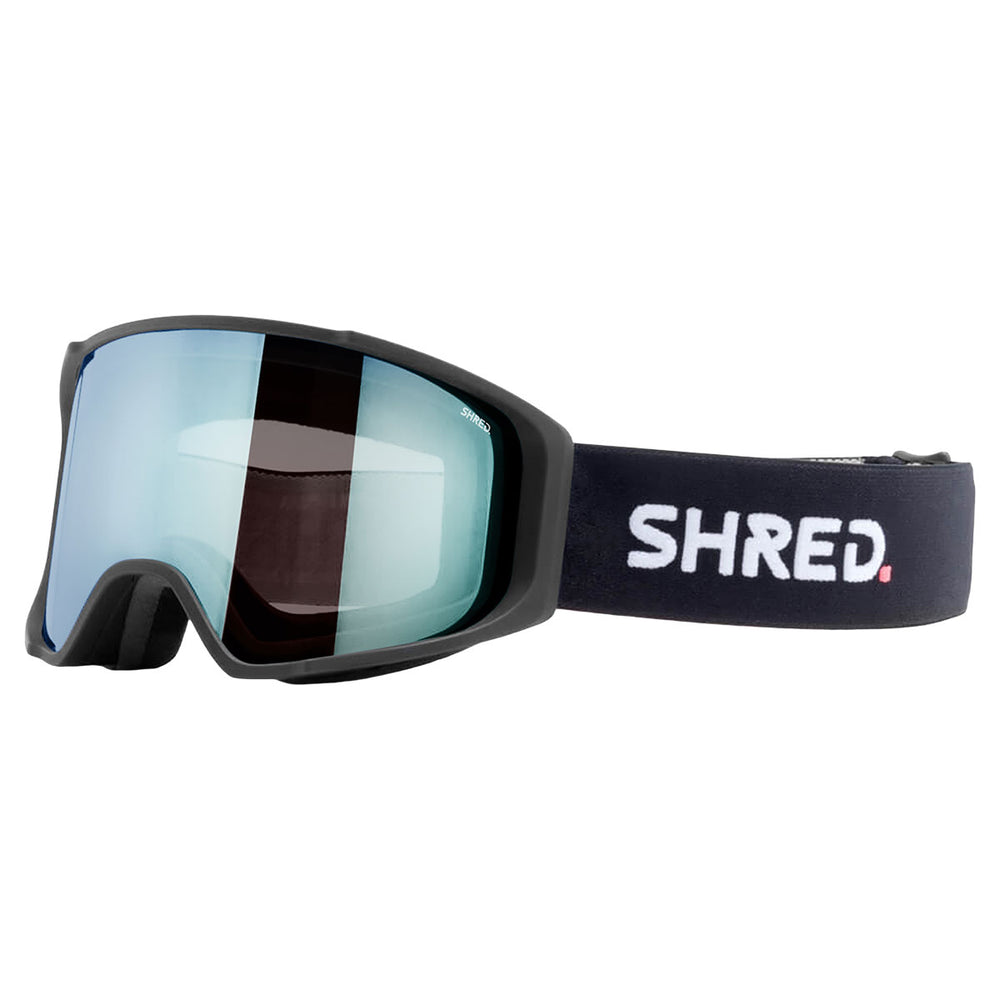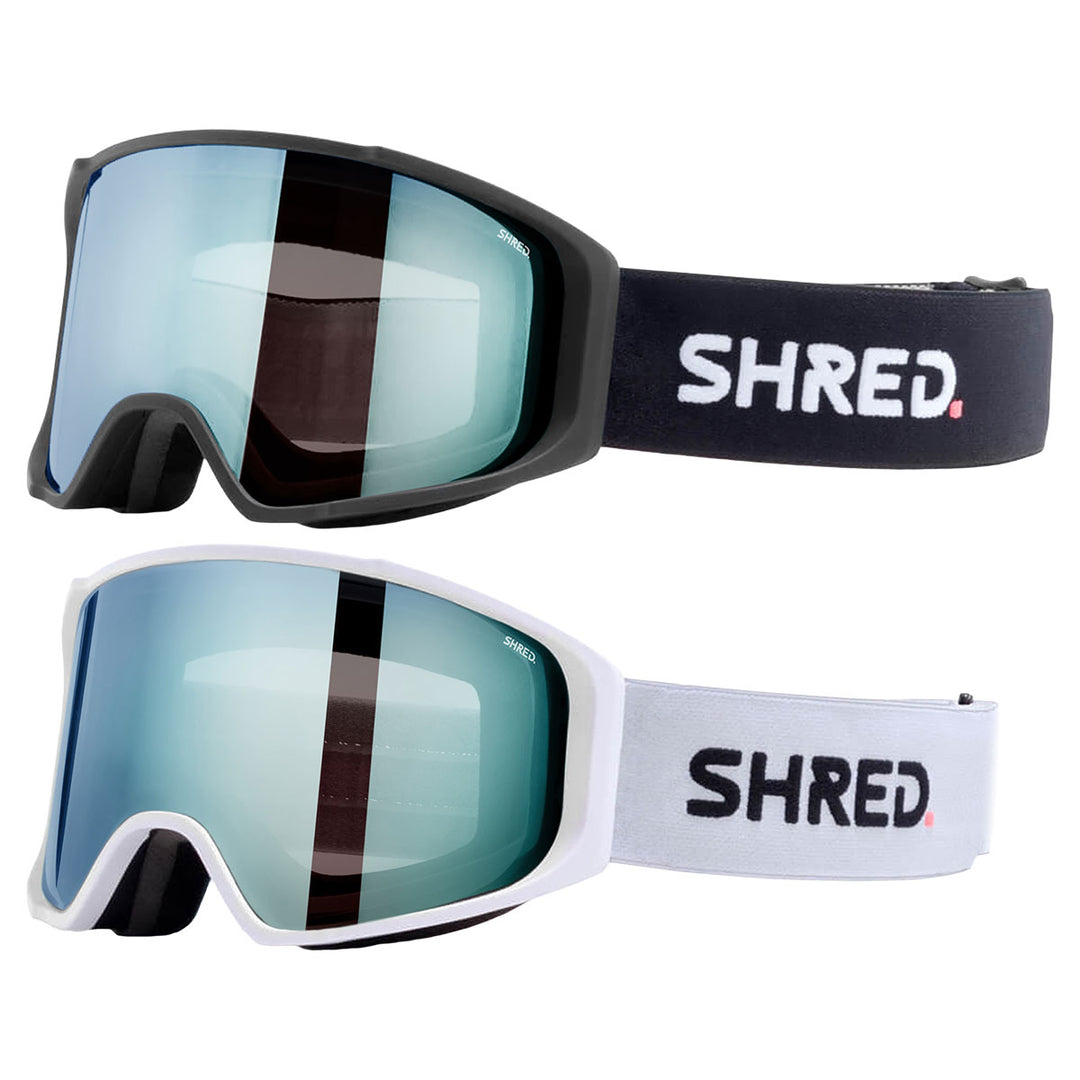
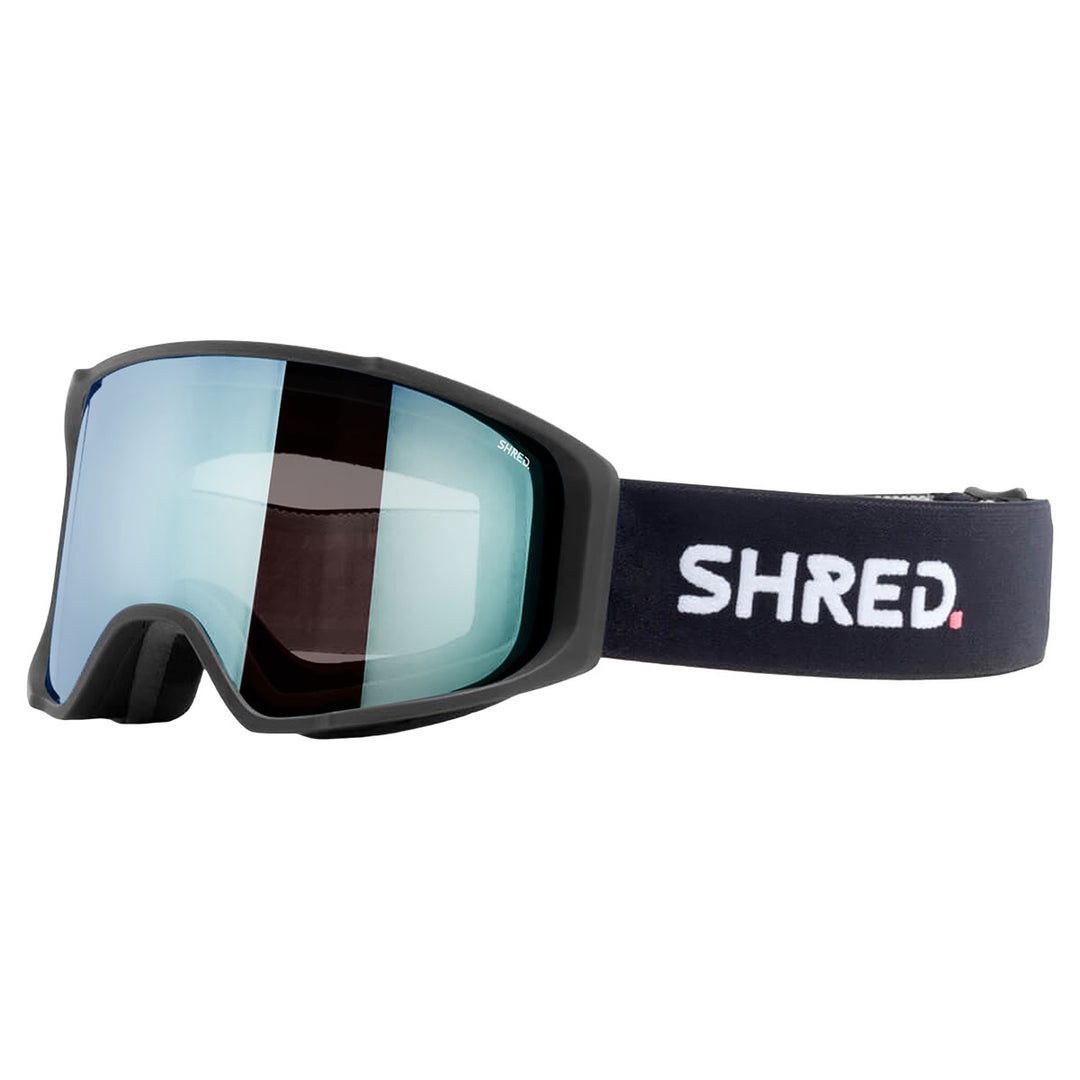
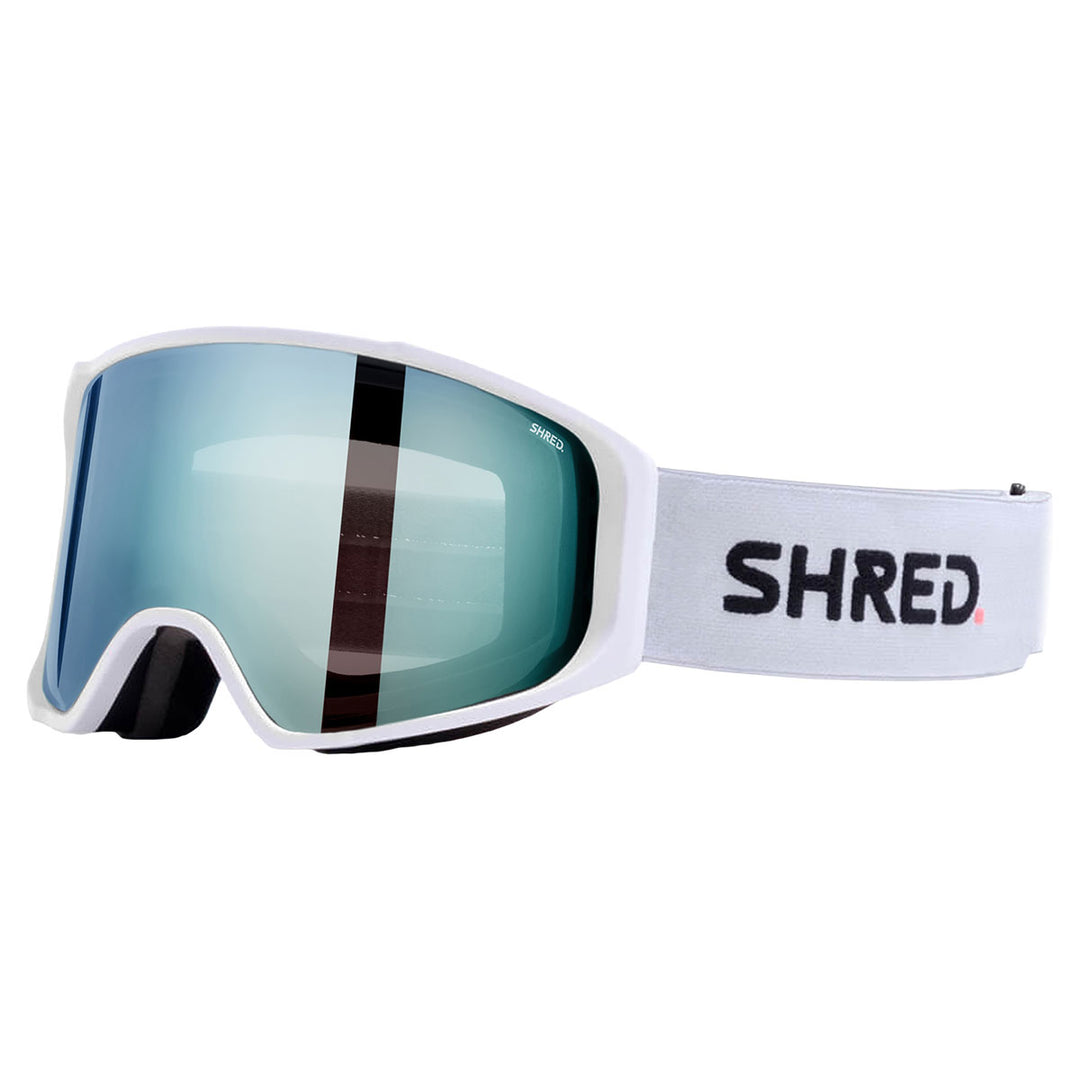
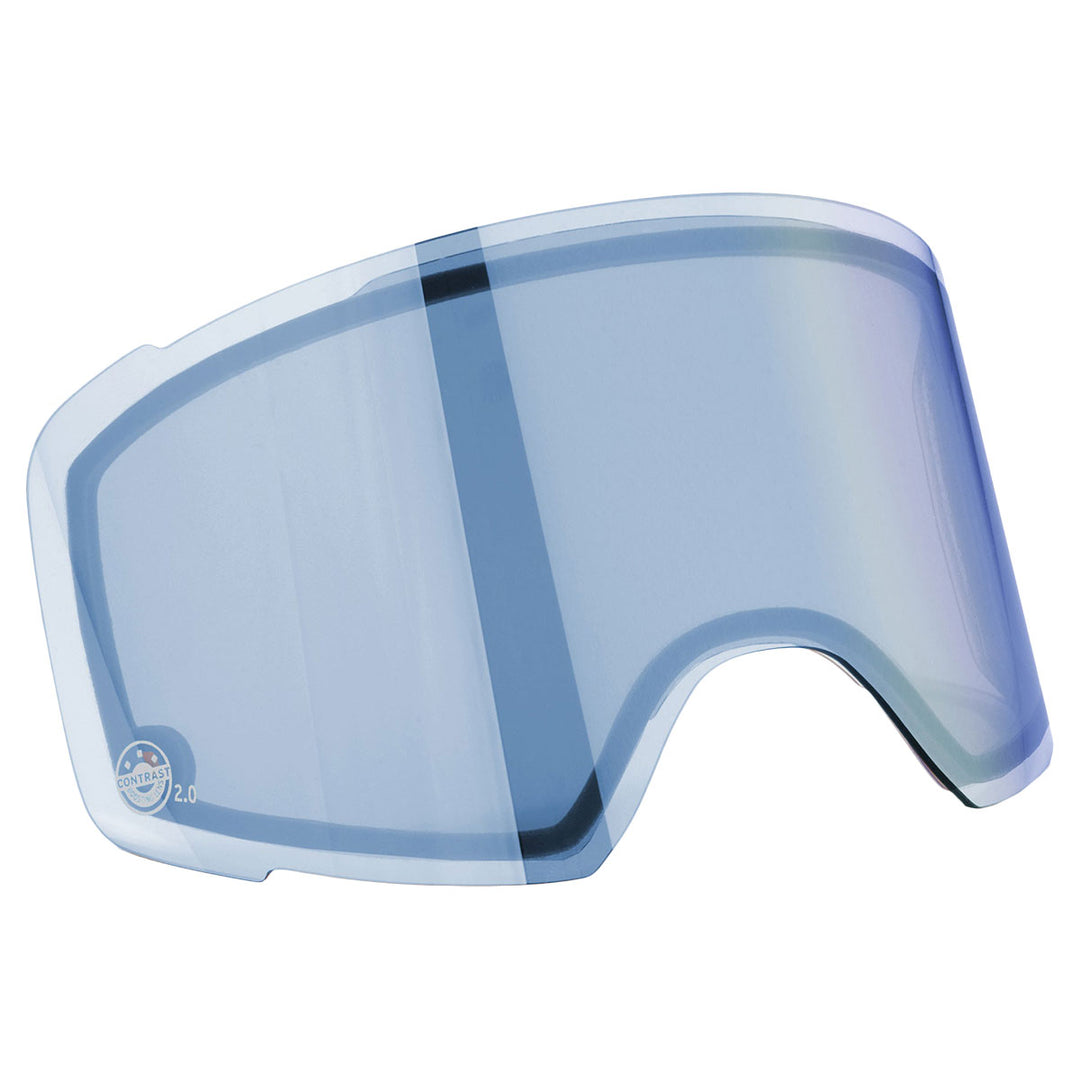


Shred Simplify+ Ski Goggles
26482
- Low stock - 1 item left
Choosing the correct SHRED ski goggle size improves comfort, helmet compatibility, and field of vision. SHRED goggles are available in multiple frame sizes to accommodate different face shapes and helmet sizes while providing the same high-performance optics for training and racing.

Measure around your head above your eyebrows and ears, passing over the widest part of the back of your head.
How to Measure for SHRED Goggles
Use a flexible measuring tape to measure the circumference of your head. Position the tape above your eyebrows and ears, wrapping it around the widest part of the back of your head. Compare your measurement to the chart below to determine the recommended SHRED goggle size.
SHRED Ski Goggle Size Guide
| SHRED Model | Suggested Fit | Head Circumference (in) | Head Circumference (cm) |
|---|---|---|---|
| Simplify | Medium to XL | 21½–24¾ | 55–63 |
| Amazify | Small to Large | 21¼–24½ | 54–62 |
| Exemplify | XS to Medium | 20½–24 | 52–61 |
Choosing the Right SHRED Goggle
Each SHRED goggle model is designed to fit a different range of face shapes and helmet sizes while delivering excellent optical clarity and protection.
- Simplify: Best for larger faces and larger helmet sizes. Provides the widest field of view.
- Amazify: A versatile medium-fit option that works well for most adult racers.
- Exemplify: Designed for smaller faces, juniors, and athletes who prefer a more compact fit.
- The foam should make even contact around your face without creating pressure points.
- The top of the frame should meet your helmet cleanly without leaving a gap.
- The goggle strap should hold the goggles securely without excessive tension.
Common Goggle Fit Mistakes
- Choosing goggles based only on appearance instead of helmet compatibility.
- Selecting a frame that is too wide, leaving gaps around the cheeks or nose.
- Choosing a frame that is too small, reducing peripheral vision.
- Trying on goggles without wearing your race helmet.
- Over-tightening the strap instead of selecting the correct frame size.
Race Place Fit Notes
- Head circumference provides a useful starting point, but helmet compatibility should always be verified.
- Different SHRED models fit differently, even when head size recommendations overlap.
- A proper fit improves visibility, comfort, and weather protection.
- Whenever possible, try on the goggles with your race helmet before purchasing.
SHRED goggle lenses are available in different tints and Visible Light Transmission (VLT) levels to provide the right amount of light transmission for changing mountain conditions. Choosing the right lens can improve visibility and help you read snow texture, terrain changes, and course conditions more clearly.
This guide compares SHRED CBL 2.0 and standard goggle lenses by VLT, lens category, and recommended light conditions so you can choose the right lens for racing, training, or everyday skiing.
SHRED Goggle Lens Comparison
| Lens | Lens Type | Conditions | Category | VLT | Recommended Use |
|---|---|---|---|---|---|
| Clear | Double | Night / Very Low Light | CAT 0 | 81% | Clear lens for night skiing and very low-light conditions. |
| Yellow | Double | Cloudy / Low Light | CAT 1 | 67% | Yellow lens designed to improve visibility in fog, clouds, and low-light conditions. |
| CBL 2.0 Nighttime | Double | Night / Very Low Light | CAT 1 | 43% | Designed to enhance contrast and clarity for night skiing and very low-light conditions. |
| CBL 2.0 Ice | Double | Variable / Partly Sunny | CAT 2 | 21% | Contrast Boosting Lens with a blue multilayer mirror designed to enhance contrast and definition in variable light. |
| CBL Plasma Mirror | Double | Sun / Variable | CAT 3 | 15% | Contrast Boosting Lens with a green multilayer mirror for increased clarity in sunny and variable conditions. |
Understanding VLT
Visible Light Transmission (VLT) is the percentage of visible light that passes through a goggle lens. A higher VLT allows more light to reach your eyes and is better suited to night, low-light, and overcast conditions. A lower VLT reduces incoming light for brighter conditions.
- CAT 0: Very high light transmission for night and very low-light conditions.
- CAT 1: High light transmission for low-light, cloudy, foggy, or night conditions depending on the specific lens.
- CAT 2: Moderate light transmission for variable and partly sunny conditions.
- CAT 3: Lower light transmission for sunny and brighter conditions.
SHRED CBL 2.0 Lens Technology
CBL 2.0 (Contrast Boosting Lens) technology is designed to increase contrast and image definition on snow. Enhanced surface detail can help skiers and racers identify changes in terrain and snow conditions more clearly when choosing a line.
CBL lenses are available with different tints, mirror finishes, and VLT levels for different light conditions. Choose the specific lens based on the expected conditions rather than mirror color alone.