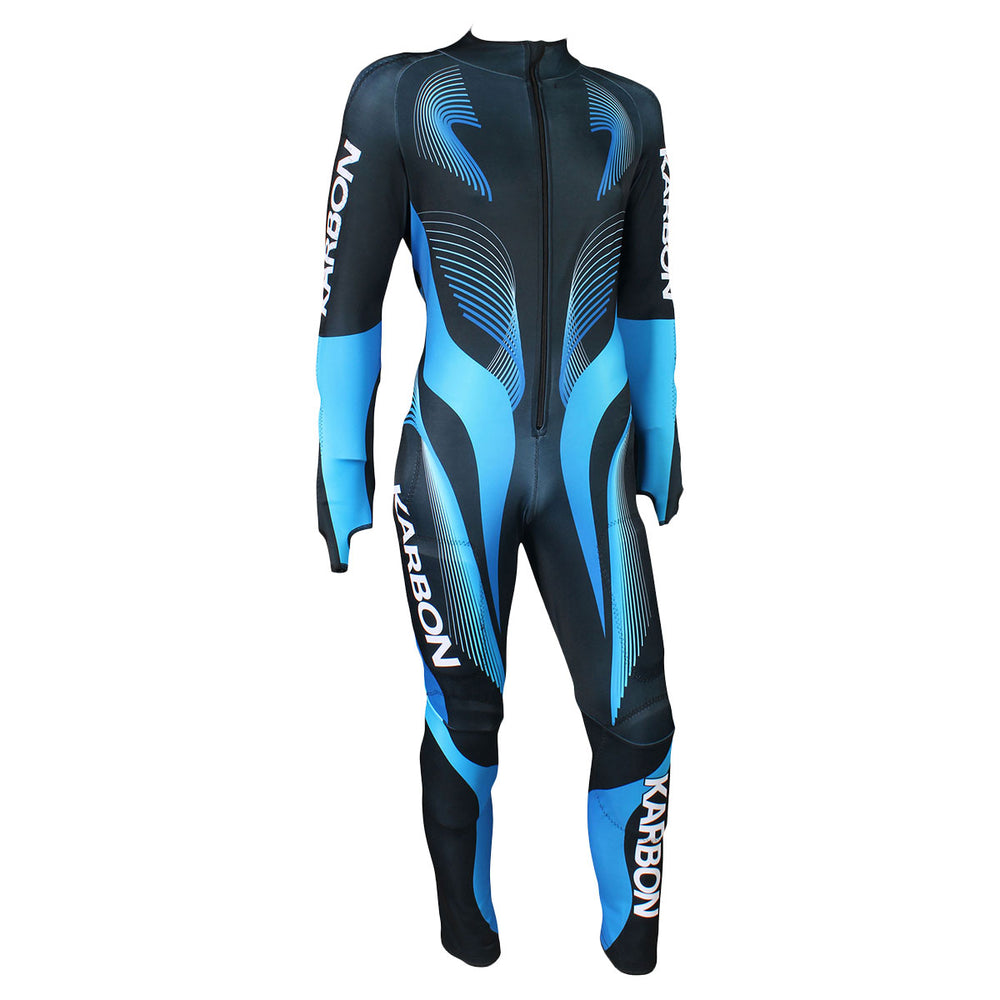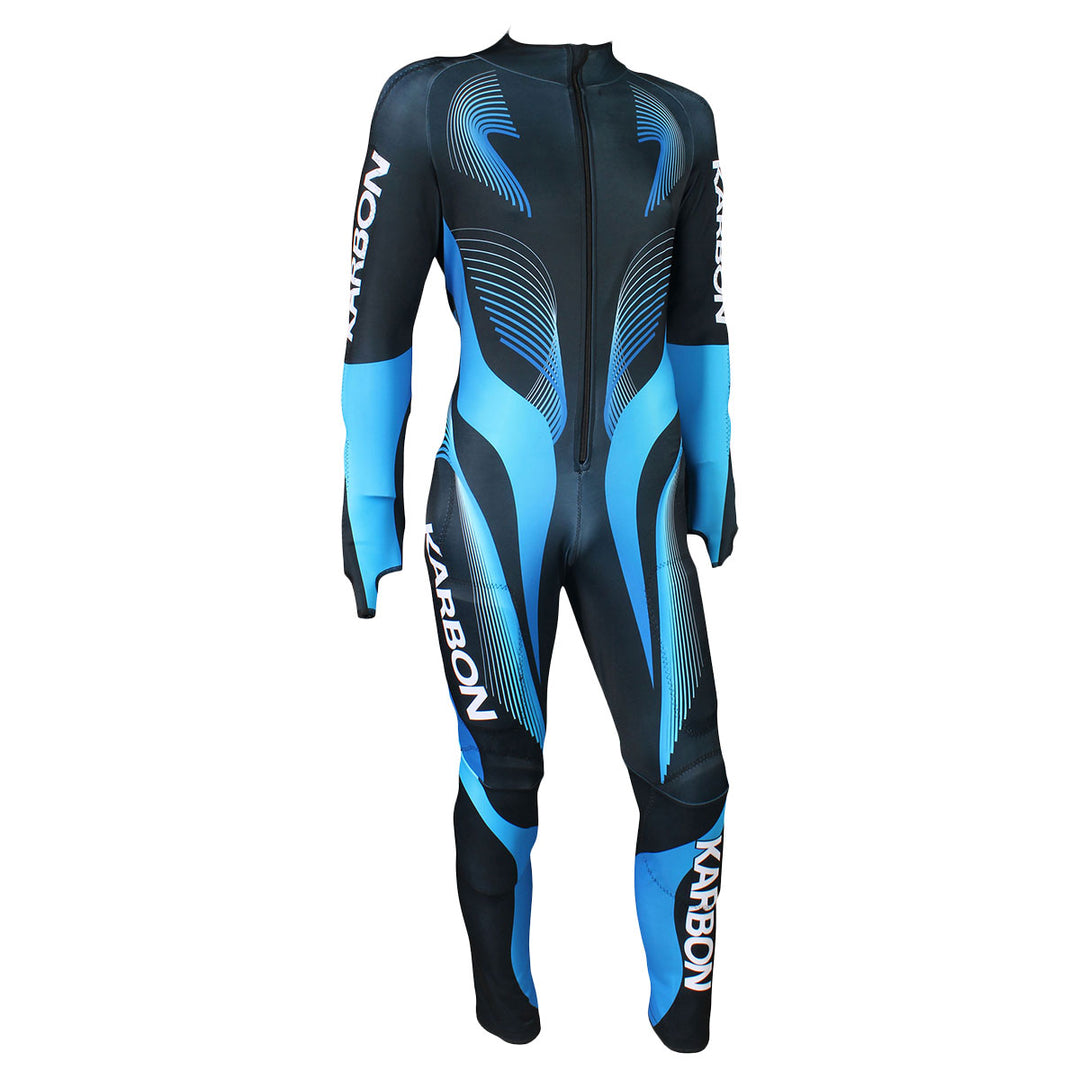
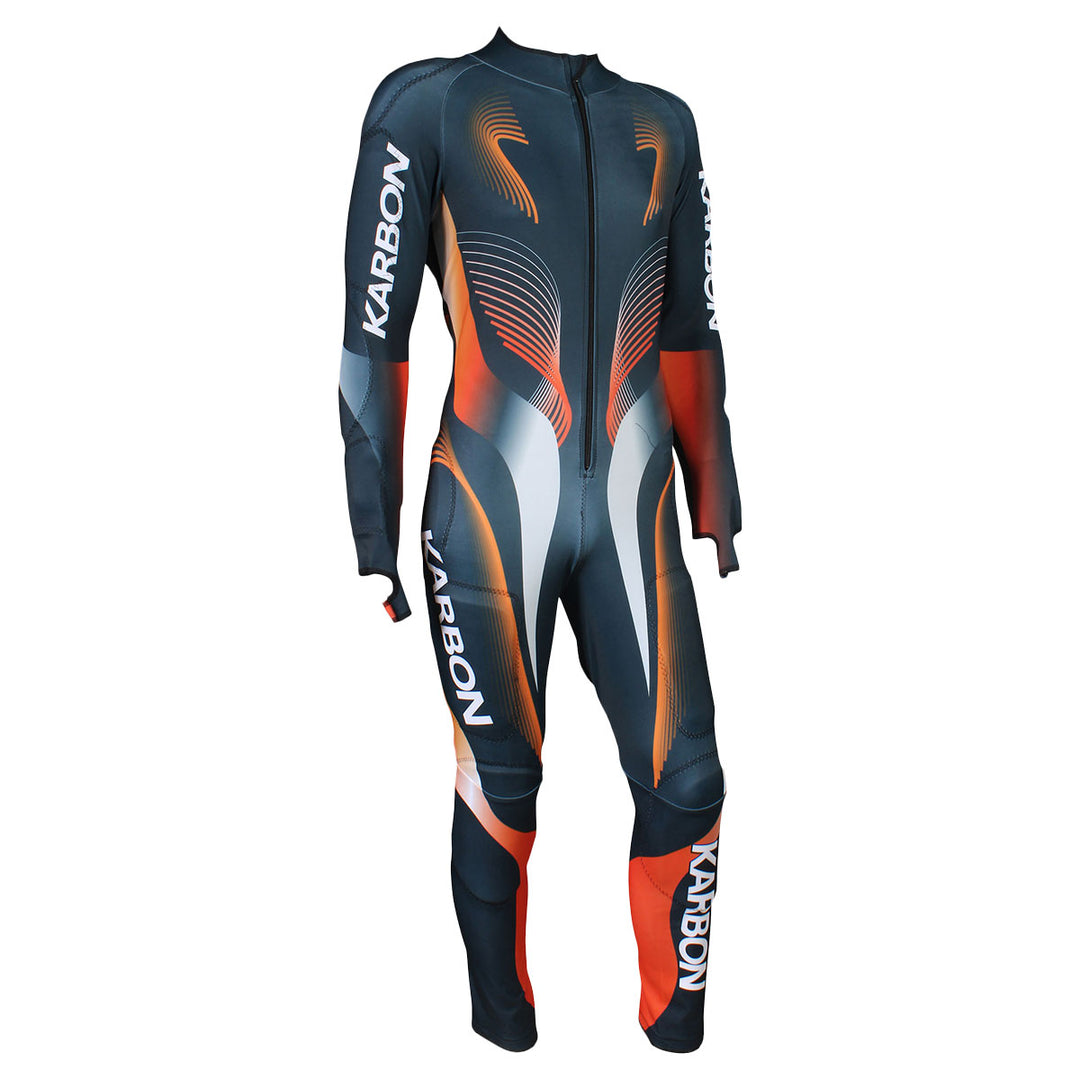


Karbon Adult Defender GS Suit
26125E
- Low stock - 3 items left
Race suits are one of the most important pieces of ski racing equipment. Their streamlined design reduces aerodynamic drag to help racers maintain speed while allowing full freedom of movement. A properly fitted race suit also keeps protective gear securely in place and provides the compression needed for consistent performance throughout training and competition.

FIS-approved race suits feature the official FIS logo printed on the back of the left leg.
FIS Race Suit Rules
FIS-approved race suits are identified by the official FIS logo printed on the back of the left leg. This logo confirms that the suit has been manufactured and certified to meet current FIS material and permeability requirements.
How Race Suits Should Fit
Race suits are designed to fit much tighter than typical athletic apparel. The close-fitting design minimizes aerodynamic drag by reducing loose fabric that creates wind resistance. A properly sized race suit should fit snugly throughout the body with minimal excess material while allowing unrestricted movement. Compression also helps keep protective pads securely positioned during skiing.
New race suits often require assistance pulling the suit over the shoulders and hips during the first few uses. This is normal. The fabric will gradually relax and conform to the athlete's body shape after several training sessions.
General Race Suit Fit Guidelines
| Fit Area | Proper Fit |
|---|---|
| Torso | Snug with no loose fabric or bunching |
| Arms & Legs | Close-fitting with full range of motion |
| Shoulders | May feel tight initially but should not restrict movement |
| Knees & Elbows | Protection should remain properly positioned while skiing |
| Overall Fit | Compression fit without discomfort or restricted circulation |
Race Suit Fabric & Durability
Modern race suits use highly elastic performance fabrics that provide freedom of movement, aerodynamic efficiency, and consistent compression. These materials are engineered to stretch and recover repeatedly while remaining lightweight and comfortable.
Because race suit fabrics prioritize stretch and performance, they are less abrasion resistant than traditional woven fabrics. Contact with Velcro, rough surfaces, ski edges, and gate hardware can damage the material.
Normal wear may include pilling, surface abrasion, small cuts, gate burns, and areas where the underlying white base fabric becomes visible when stretched. These cosmetic signs of use are common in alpine ski racing and do not necessarily affect performance.
Common Race Suit Fit Mistakes
- Choosing a race suit based on comfort rather than performance fit.
- Purchasing a suit that feels loose when new.
- Ignoring manufacturer sizing charts.
- Using a suit that allows pads to shift during skiing.
- Allowing Velcro or sharp ski edges to contact the fabric.
Race Place Fit Notes
- Race suits are designed to fit tighter than training apparel or outerwear.
- Most suits relax slightly after several uses.
- FIS-approved suits are only required for specific race categories.
- Race suit sizing varies between brands and models.
- Protective pads should remain securely positioned throughout a run.
- Store race suits away from exposed Velcro and sharp equipment edges.
A properly fitted ski racing suit improves aerodynamics, comfort, and freedom of movement. Race suits are designed to fit much tighter than outerwear or training apparel. They should feel snug when new and gradually conform to your body after several days of use. Understanding how race suits fit and how stretch fabrics perform will help you choose the correct size and care for your suit throughout the season.
How a Race Suit Should Fit
Race suits are engineered to fit like a second skin. When sized correctly, a new suit will feel very snug and may require assistance pulling it over the shoulders the first few times it is worn.
- The suit should fit closely without restricting movement.
- Shoulders and torso will feel tight when the suit is new.
- Legs and arms should remain smooth with minimal excess fabric.
- The suit should allow a full range of skiing movements while maintaining a close aerodynamic fit.
- Wrinkles or loose fabric generally indicate the suit is too large.
Race Suit Break-In Period
Modern race suits use highly elastic fabrics that gradually relax with use. During the first several training days, the material molds to the athlete's body while maintaining compression and freedom of movement.
- Expect the first few fittings to feel exceptionally snug.
- The fabric will gradually stretch to match your body shape.
- A properly sized suit becomes noticeably more comfortable after several uses.
- Oversized suits reduce aerodynamic performance and may allow protective padding to shift during racing.
Race Suit Fabric Characteristics
Race suits are constructed from lightweight, highly elastic knit fabrics that prioritize stretch, mobility, and aerodynamic performance. These technical materials differ significantly from traditional woven outerwear fabrics.
- Stretch fabrics are lightweight and highly flexible but are less abrasion resistant than woven materials.
- Avoid contact with abrasive surfaces such as Velcro whenever possible.
- Printed graphics are applied to the surface of a white base fabric, so slight whitening may appear in areas of heavy stretch.
- Minor pilling, gate burns, edge cuts, and general wear are normal signs of regular race use.
Race Suit Care Tips
- Fasten all Velcro before transporting or storing your race suit.
- Avoid contact with sharp ski edges, boot buckles, and rough surfaces.
- Wash according to the manufacturer's instructions using mild detergent.
- Allow the suit to air dry and avoid excessive heat.
- Inspect high-wear areas periodically for cuts or damage after training and racing.
Race Place Fit Notes
- Race suits are intentionally much tighter than jackets or training apparel.
- The best-fitting race suit is typically snug when new and becomes more comfortable after several uses.
- Minor cosmetic wear is a normal characteristic of high-performance stretch fabrics.
- Proper sizing improves aerodynamics, comfort, and the effectiveness of integrated protective padding.