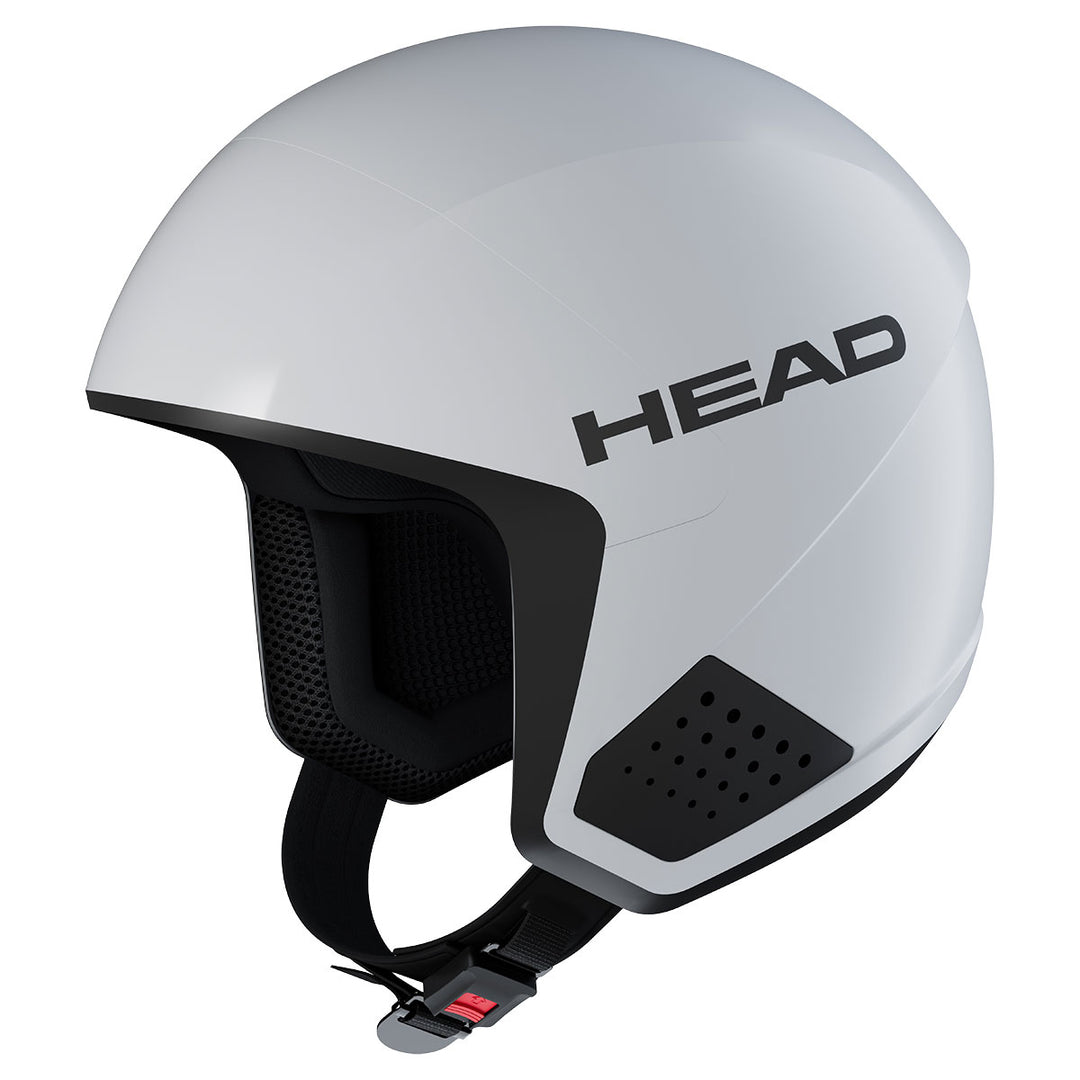
HEAD Downforce MIPS FIS Helmet

HEAD Downforce MIPS FIS Helmet

26423A

Sale
Regular price$300.00
/
Shipping calculated at checkout.

Color
Size
  • Low stock - 2 items left
  • Backordered, shipping soon
Conform to FIS Label

Helmet regulation (2014/15), that requires "Conforms to FIS" label is applicable at all levels without exception for GS, SG and DH. All helmets that meet this regulation in our store are labeled "FIS" for your convenience. Download the current SPECIFICATIONS FOR ALPINE COMPETITION EQUIPMENT and the USSA Helmet Rule for full details.

A properly fitted ski racing helmet is essential for comfort, safety, and performance. A helmet that is too loose can shift during a run and reduce protection, while one that is too tight can create pressure points and discomfort. Measuring your head correctly and checking the fit will help ensure your helmet performs as designed.

How to measure head circumference for a ski racing helmet

Measure around your head approximately one inch above your eyebrows and around the widest part of the back of your head.

Quick Navigation: Sizing | Size Chart | Fit Check | Fit Notes

How to Measure for a Ski Racing Helmet

Wrap a flexible measuring tape around your head approximately one inch above your eyebrows, passing over the widest part of the back of your head. Record the measurement in either inches or centimeters and compare it to the helmet manufacturer's sizing chart.

If your measurement falls between two sizes, choose the larger size. Helmets should fit snugly without creating painful pressure points.

Helmet Size Guide

Head Circumference (Inches) Helmet Size (cm)
20" 51 cm
20 1/4" 52 cm
20 7/8" 53 cm
21 1/4" 54 cm
21 5/8" 55 cm
22" 56 cm
22 3/8" 57 cm
22 3/4" 58 cm
23 1/4" 59 cm
23 5/8" 60 cm
24 3/8" 61 cm
Race Place Tip: Many race helmets become slightly more comfortable as the liner breaks in over time. A new helmet should feel snug but not painful. If it moves easily when you shake your head, it is likely too large.

Helmet Fit Check

A properly fitted ski racing helmet should sit level on your head and remain secure during aggressive skiing. Perform these checks before using your helmet on the mountain.

  • The helmet should sit square on your head and not tilt forward or backward.
  • Cheek pads should make light contact without creating uncomfortable pressure.
  • There should be no noticeable gaps around your temples, forehead, or the back of your head.
  • Fasten the chin strap securely and gently shake your head side to side and up and down. The helmet should move with your head without shifting independently.
  • With the chin strap fastened, try to roll the helmet forward off your head. If it rolls off easily, the helmet is too large.
  • Wear the helmet for several minutes and check for pressure points or soreness. If discomfort develops, try a different size or another brand, as helmet shapes vary.

Common Helmet Fit Mistakes

  • Choosing a helmet that is too large because it feels more comfortable initially.
  • Tilting the helmet too far back, exposing the forehead.
  • Leaving gaps between the helmet and the sides of the head.
  • Failing to tighten or properly adjust the chin strap.
  • Selecting a helmet based only on age instead of actual head measurements.

Race Place Fit Notes

  • Always measure your head before purchasing a new helmet.
  • Helmet fit varies between brands and even between different models from the same manufacturer.
  • A snug fit improves comfort, stability, and protection while skiing.
  • If you plan to wear a balaclava or thin liner, wear it while trying on your helmet.
  • For racing, verify that your helmet complies with the certification requirements for your league or governing body.

Quick Specs

  • Use: SL, GS, SG & DH Ski Racing
  • Certification: FIS RH 2013
  • Construction: Hardshell
  • Impact Protection: MIPS
  • Ventilation: Thermal Ventilation
  • Chin Guard: Compatible, Sold Separately

Description & Features

The HEAD Downforce MIPS RD FIS Helmet is an aerodynamic race helmet built for slalom, giant slalom, super-G, and downhill ski racing. Durable Hardshell construction and MIPS rotational impact protection provide race-focused protection while maintaining a streamlined profile for speed. The FIS-certified design gives alpine racers one helmet for training and competition across technical and speed disciplines.

Thermal Ventilation automatically releases warm air while helping block cold drafts, and the soft microfleece Beanie Liner uses mesh zones to move heat and moisture toward the helmet vents. Additional reinforcement at the front helps protect against repeated slalom gate contact, while chin guard compatibility lets racers configure the helmet for slalom. A transparent protective foil adds durability for the demands of ski race training and competition.

Key Features

  • FIS-certified race helmet designed for SL, GS, SG, and DH ski racing
  • MIPS helps reduce rotational motion from certain angled impacts
  • Durable Hardshell construction provides strong impact protection
  • Aerodynamic race shape designed for technical and speed disciplines
  • Additional front reinforcement helps protect against repeated slalom gate impacts
  • Transparent protective foil adds durability to the helmet surface
  • Thermal Ventilation releases warm air while helping block cold drafts
  • Microfleece Beanie Liner provides warmth and moisture management
  • Integrated mesh zones help release heat and moisture
  • Compatible with a chin guard for slalom racing

Specs

  • Use: SL, GS, SG & DH Ski Racing
  • Certification: FIS RH 2013
  • Construction: Hardshell
  • Impact Protection: MIPS
  • Ventilation: Thermal Ventilation
  • Liner: Microfleece Beanie Liner
  • Chin Guard: Compatible, Sold Separately

Construction & Technology

MIPS

MIPS uses a low-friction layer integrated into the helmet to help reduce rotational motion transferred to the head during certain angled impacts.

Carbon Reinforcement

Carbon reinforcement across the front of the helmet increases strength in an area exposed to repeated slalom gate contact, adding race-specific impact resistance without compromising the helmet's streamlined shape.

Transparent Protective Foil

A transparent protective foil adds durability to the outer surface and helps protect the helmet from the repeated contact and wear associated with alpine ski racing.

Hardshell Technology

HEAD's Hardshell construction uses a tough outer shell for high impact resistance and durability, making it well suited to the repeated demands of ski race training and competition.

Thermal Ventilation

Thermal Ventilation uses an integrated airflow system to release warm air while helping prevent cold drafts from entering, maintaining a more balanced helmet climate without manual adjustment.

Beanie Liner

The soft microfleece Beanie Liner provides warmth and adapts comfortably to the head. Integrated mesh zones allow heat and moisture to escape through the helmet ventilation system.


Recently viewed