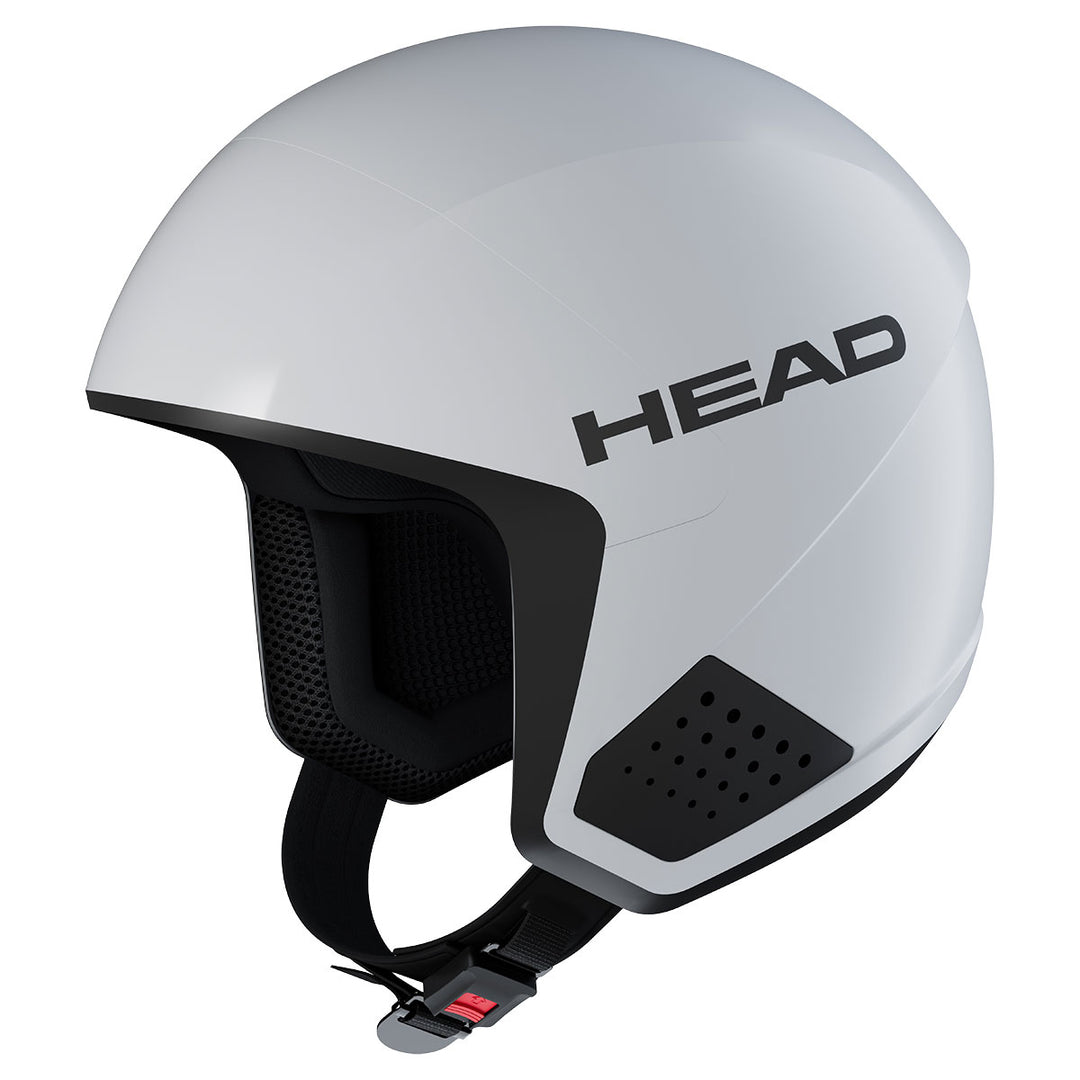
HEAD Downforce FIS MIPS Helmet

HEAD Downforce FIS MIPS Helmet

25423A

Sale
Regular price$300.00
/
Shipping calculated at checkout.

Color
Size
  • Low stock - 2 items left
  • Backordered, shipping soon
Conform to FIS Label

Helmet regulation (2014/15), that requires "Conforms to FIS" label is applicable at all levels without exception for GS, SG and DH. All helmets that meet this regulation in our store are labeled "FIS" for your convenience. Download the current SPECIFICATIONS FOR ALPINE COMPETITION EQUIPMENT and the USSA Helmet Rule for full details.

A properly fitted ski racing helmet is essential for comfort, safety, and performance. A helmet that is too loose can shift during a run and reduce protection, while one that is too tight can create pressure points and discomfort. Measuring your head correctly and checking the fit will help ensure your helmet performs as designed.

How to measure head circumference for a ski racing helmet

Measure around your head approximately one inch above your eyebrows and around the widest part of the back of your head.

Quick Navigation: Sizing | Size Chart | Fit Check | Fit Notes

How to Measure for a Ski Racing Helmet

Wrap a flexible measuring tape around your head approximately one inch above your eyebrows, passing over the widest part of the back of your head. Record the measurement in either inches or centimeters and compare it to the helmet manufacturer's sizing chart.

If your measurement falls between two sizes, choose the larger size. Helmets should fit snugly without creating painful pressure points.

Helmet Size Guide

Head Circumference (Inches) Helmet Size (cm)
20" 51 cm
20 1/4" 52 cm
20 7/8" 53 cm
21 1/4" 54 cm
21 5/8" 55 cm
22" 56 cm
22 3/8" 57 cm
22 3/4" 58 cm
23 1/4" 59 cm
23 5/8" 60 cm
24 3/8" 61 cm
Race Place Tip: Many race helmets become slightly more comfortable as the liner breaks in over time. A new helmet should feel snug but not painful. If it moves easily when you shake your head, it is likely too large.

Helmet Fit Check

A properly fitted ski racing helmet should sit level on your head and remain secure during aggressive skiing. Perform these checks before using your helmet on the mountain.

  • The helmet should sit square on your head and not tilt forward or backward.
  • Cheek pads should make light contact without creating uncomfortable pressure.
  • There should be no noticeable gaps around your temples, forehead, or the back of your head.
  • Fasten the chin strap securely and gently shake your head side to side and up and down. The helmet should move with your head without shifting independently.
  • With the chin strap fastened, try to roll the helmet forward off your head. If it rolls off easily, the helmet is too large.
  • Wear the helmet for several minutes and check for pressure points or soreness. If discomfort develops, try a different size or another brand, as helmet shapes vary.

Common Helmet Fit Mistakes

  • Choosing a helmet that is too large because it feels more comfortable initially.
  • Tilting the helmet too far back, exposing the forehead.
  • Leaving gaps between the helmet and the sides of the head.
  • Failing to tighten or properly adjust the chin strap.
  • Selecting a helmet based only on age instead of actual head measurements.

Race Place Fit Notes

  • Always measure your head before purchasing a new helmet.
  • Helmet fit varies between brands and even between different models from the same manufacturer.
  • A snug fit improves comfort, stability, and protection while skiing.
  • If you plan to wear a balaclava or thin liner, wear it while trying on your helmet.
  • For racing, verify that your helmet complies with the certification requirements for your league or governing body.
Description & Features

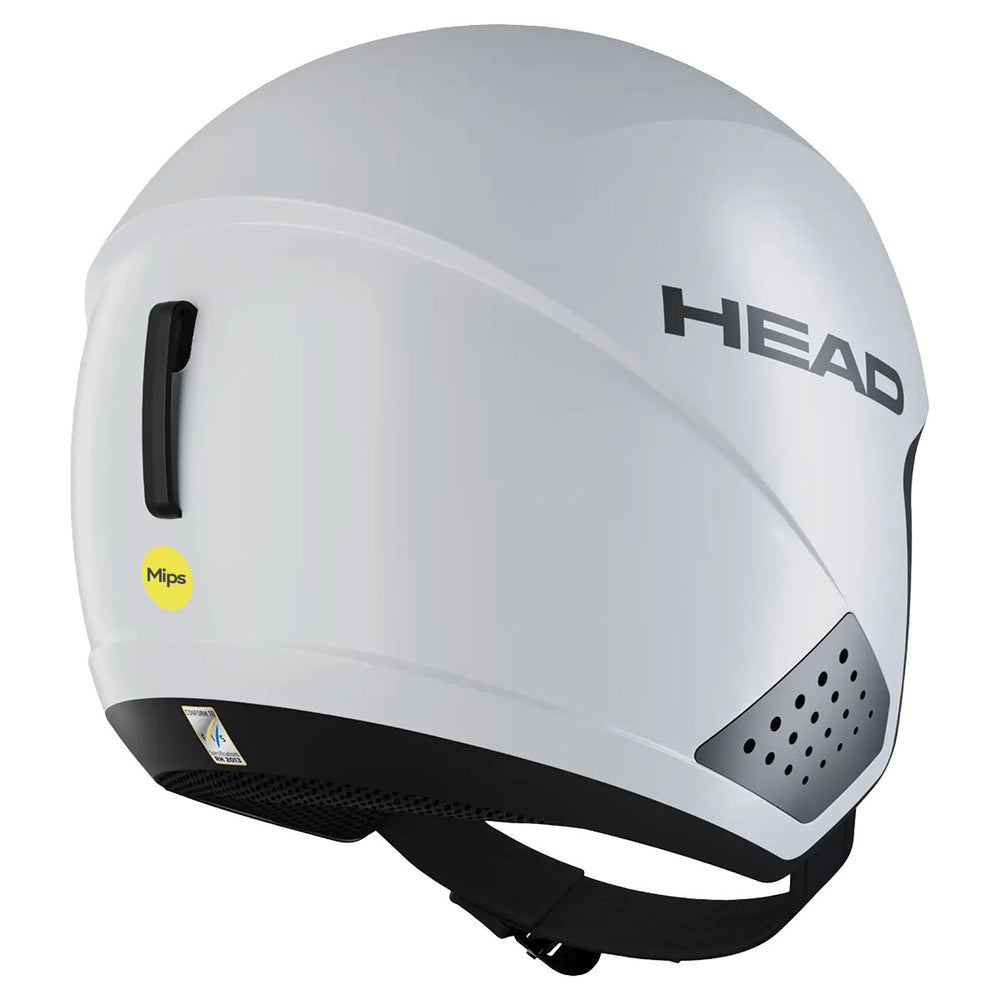
The HEAD Downforce MIPS FIS Helmet sets a new benchmark in alpine racing safety and performance. Built with a strong, durable hardshell and lightweight dual-density core, it delivers maximum impact protection while staying aerodynamic and streamlined. Designed for all FIS-level competitions, it features changeable adapter plates for both speed and technical disciplines: acoustic plates for downhill and super-G, or a chin guard mount for slalom. Thermal Ventilation ensures consistent airflow, while a removable neckgator and beanie liner enhance comfort in variable conditions. With a durable metal chinstrap buckle, included helmet pouch, and full FIS RH 2013 certification, the Downforce MIPS is engineered for serious racers who demand uncompromised safety and speed.

Features

  • Durable hardshell construction with excellent impact protection
  • Dual Density Core increases performance to meet FIS RH 2013 standard
  • Streamlined, aerodynamic design with lightweight build
  • Thermal Ventilation releases warm air while blocking cold drafts
  • Changeable adapter plates: acoustic plates for speed, chin guard mount for slalom
  • Chinguard compatible for added protection in technical disciplines
  • Removable neckgator for variable conditions and easy cleaning
  • Microfleece beanie liner adapts to head shape for comfort and moisture control
  • Durable metal chinstrap buckle for strength and security
  • Helmet pouch included for protection during transport
  • Certified: EN 1077:2007 Class A, ASTM F 2040, and FIS RH 2013

Technical Info

Hardshell Technology

This helmet technology is known for outstanding durability and impact protection. It is used in HEAD race and rental helmets to ensure long-lasting safety and performance.

Dual Density Core

This patented EPS core features dual densities for enhanced performance. It increases impact protection and ensures the helmet meets the FIS RH 2013 standard.

Chinguard Compatible

Designed for versatility, a chinguard can be easily mounted to the helmet for added protection during slalom disciplines.

Thermal Ventilation

An automatic ventilation system that releases warm air while blocking cold drafts, maintaining a balanced and comfortable helmet climate.

Changeable Adapter Plates

Flat adapter plates optimize acoustics for speed disciplines, while chin guard adapters can be used for technical disciplines like slalom.

Microfleece

The soft microfleece material feels comfortable against the skin, draws moisture away, and helps regulate temperature inside the helmet.

Beanie Liner

The beanie liner adapts to the head for comfort, prevents cold air intrusion, and includes mesh zones to release heat and moisture for a pleasant head climate.

Removable Neckgator

The neckgator can be removed to suit changing weather conditions or for cleaning, adding versatility and comfort.

Metal Chinstrap Buckle

A durable and tactile metal chinstrap buckle adds strength, security, and a premium look to the helmet design.

Helmet Pouch Included

Each helmet comes with a protective pouch to prevent scratches and damage during transport or storage.

EN 1077:2007 Class A

This certification is used for racing helmets with hard ear protectors and requires high puncture resistance standards.

ASTM F 2040

The North American equivalent to the European CE-Test, using comparable methods to certify helmet safety.

FIS RH 2013

Complies with FIS regulations for GS, SG, and DH racing helmets, meeting the strictest standards for competitive alpine skiing.


Recently viewed