
Swix WC Pro Carbon Ski Pole

Swix WC Pro Carbon Ski Pole

26382C

Sale
Regular price$180.00
/
Shipping calculated at checkout.

Style
Size
  • Low stock - 2 items left
  • Backordered, shipping soon

Choosing the correct ski pole length improves balance, timing, and efficiency on the race course. While height provides an excellent starting point, pole length should also reflect your racing discipline and skiing style. Slalom racers often prefer slightly shorter poles, while Giant Slalom, Super-G, and Downhill racers typically use longer poles for stronger starts and improved propulsion.

How to size ski poles using the 90-degree forearm method

Invert the pole and hold it below the basket. A level forearm indicates a good starting length.

How to Size Ski Poles

The simplest way to determine ski pole length is by using your height together with the sizing chart below. Another widely used method is the 90-degree forearm test.

  • Turn the ski pole upside down so the grip rests on the floor.
  • Hold the pole just below the basket.
  • If your forearm is parallel to the floor (approximately a 90-degree elbow angle), the pole is a good starting length.

Personal preference, skiing discipline, and technique may lead you to choose a slightly different length.

Race Place Tip: If you're between pole sizes, it's usually better to choose the longer option. Most straight ski poles can be shortened by removing the grip and trimming the shaft from the top.

Ski Pole Size Guide

Skier Height (in) Pole Length (in) Pole Length (cm)
45–48 35–36 90
49–52 37–38 95
53–56 39–40 100
57–60 41–42 105
61–63 43–44 110
64–66 45–46 115
67–69 47–48 120
70–72 49–50 125
73–75 51–52 130
76–78 53–54 135
79+ 55–56 140

Pole Length by Racing Discipline

  • Slalom (SL): Many racers prefer a slightly shorter pole because the lower body position and rapid pole plants are more comfortable.
  • Giant Slalom (GS): Poles are typically about 2 inches (5 cm) longer than SL poles for stronger starts.
  • Super-G (SG) & Downhill (DH): Longer poles provide maximum push out of the start and pole planting is generally not required during the run.

Adjusting Pole Length

Most straight aluminum and composite ski poles can be shortened by removing the grip and trimming the shaft from the top before reinstalling the grip.

  • Always cut the shaft from the top, never from the basket end.
  • GS, SG, and DH bent poles can often be shortened, but carefully consider how shortening affects the bend location relative to your body while in a tuck.
  • Follow the manufacturer's recommendations when modifying poles.

Race Place Notes

  • Height provides an excellent starting point, but personal preference still matters.
  • Most racers use shorter poles for Slalom and longer poles for speed events.
  • Buying a slightly longer straight pole provides flexibility since it can usually be cut to length later.
  • Consult your coach if you're unsure which length best matches your racing technique and discipline.

FedEx has recently implemented significant shipping fee increases for packages exceeding 48 inches long. These changes impact the cost of shipping items like ski poles and skis.

We are actively exploring options to mitigate these additional fees and continue providing you with the best possible service and value.

Thank you for your understanding and continued support as we navigate this change.

Team Race Place
Description & Features

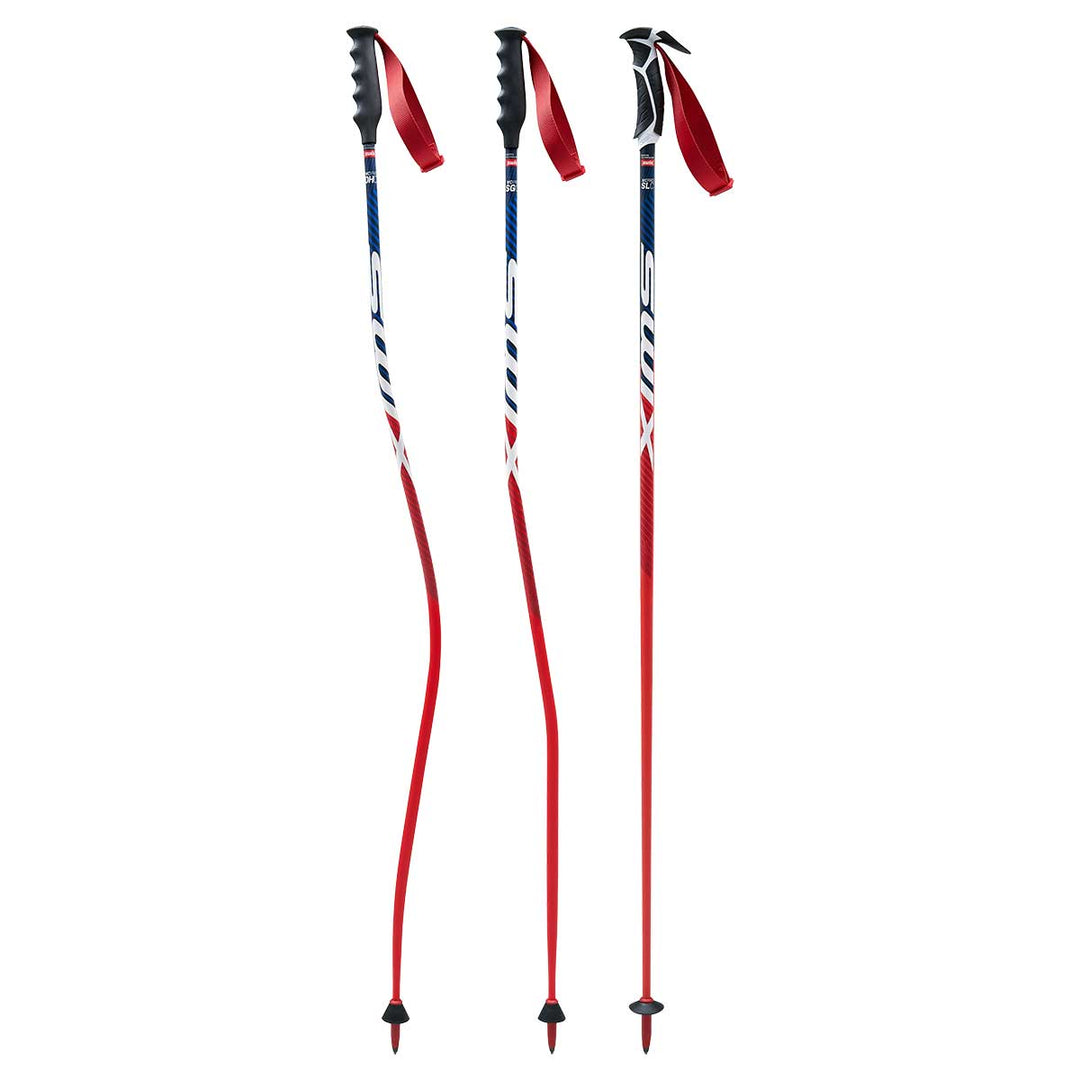
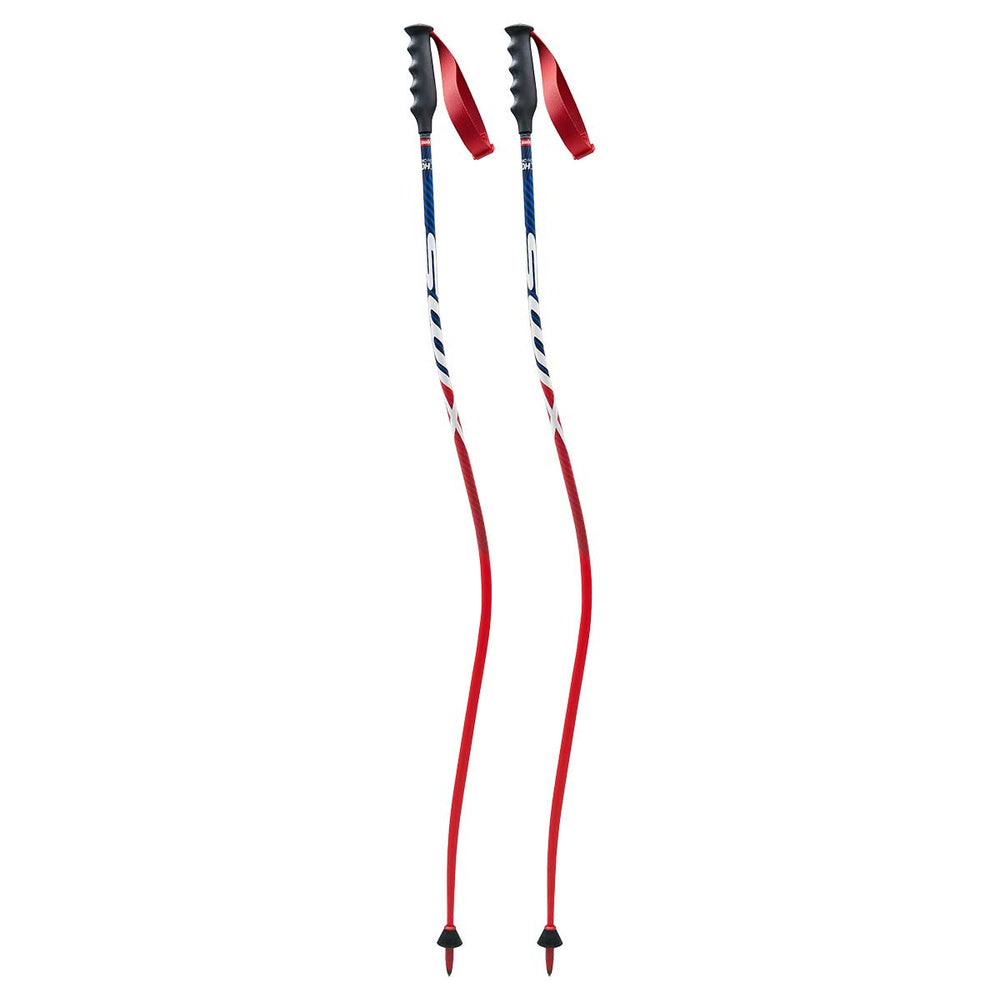
Swix WC Pro Carbon Ski Poles are competition-level alpine race poles available in discipline-specific slalom, giant slalom and downhill versions. Each uses a carbon shaft engineered for a balance of low weight, stiffness, swing and impact strength, with dedicated shaft shapes, grips and baskets matched to the demands of each race discipline.

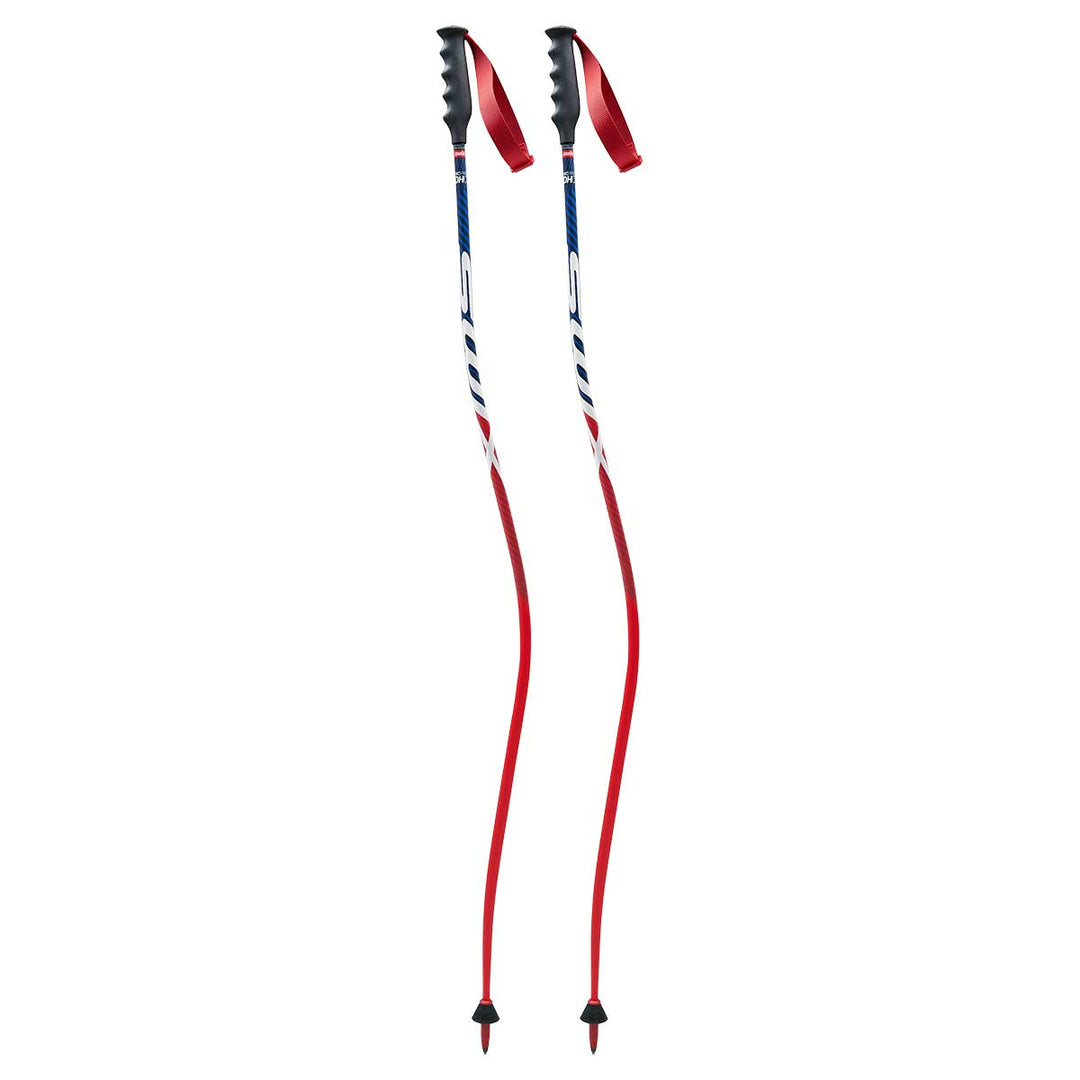
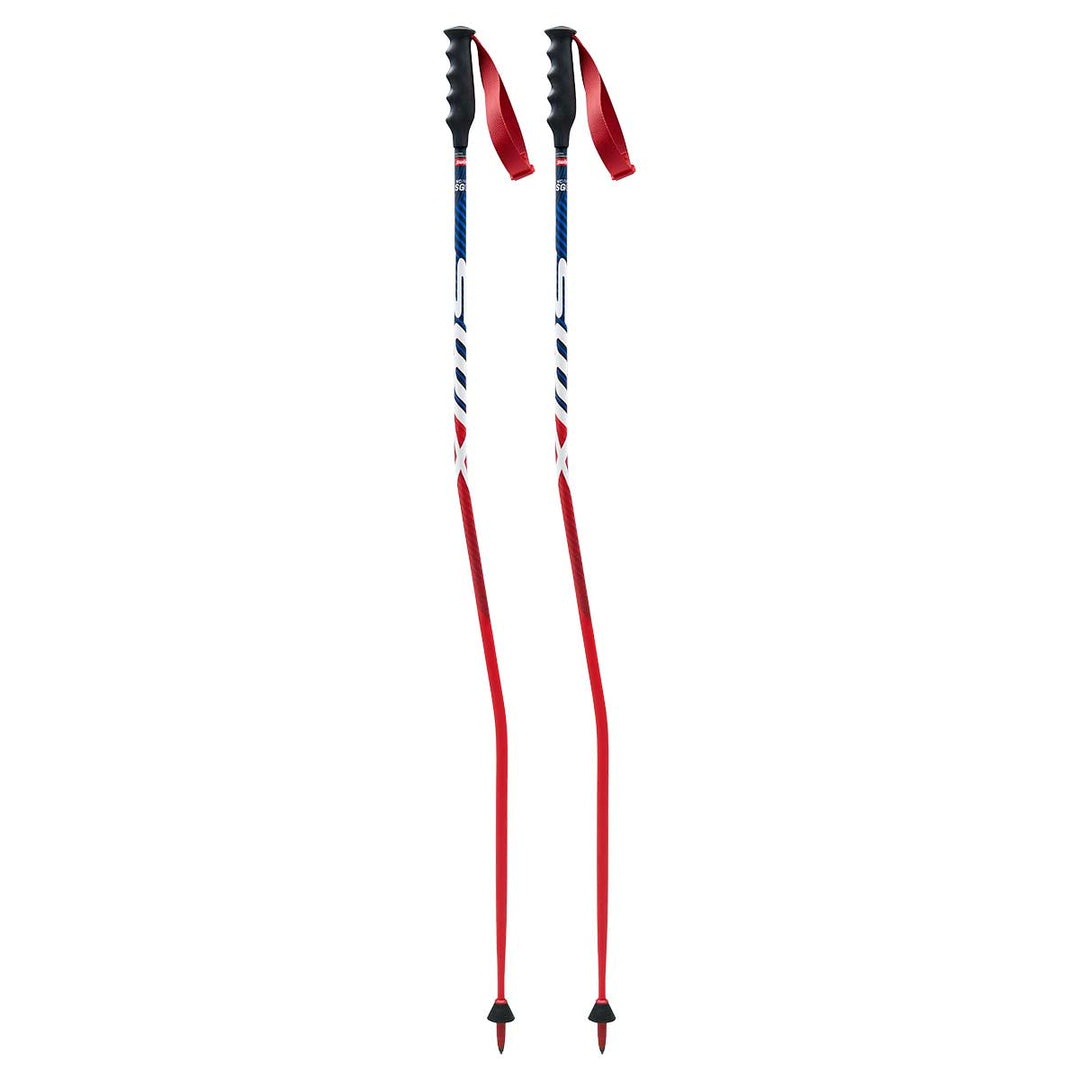
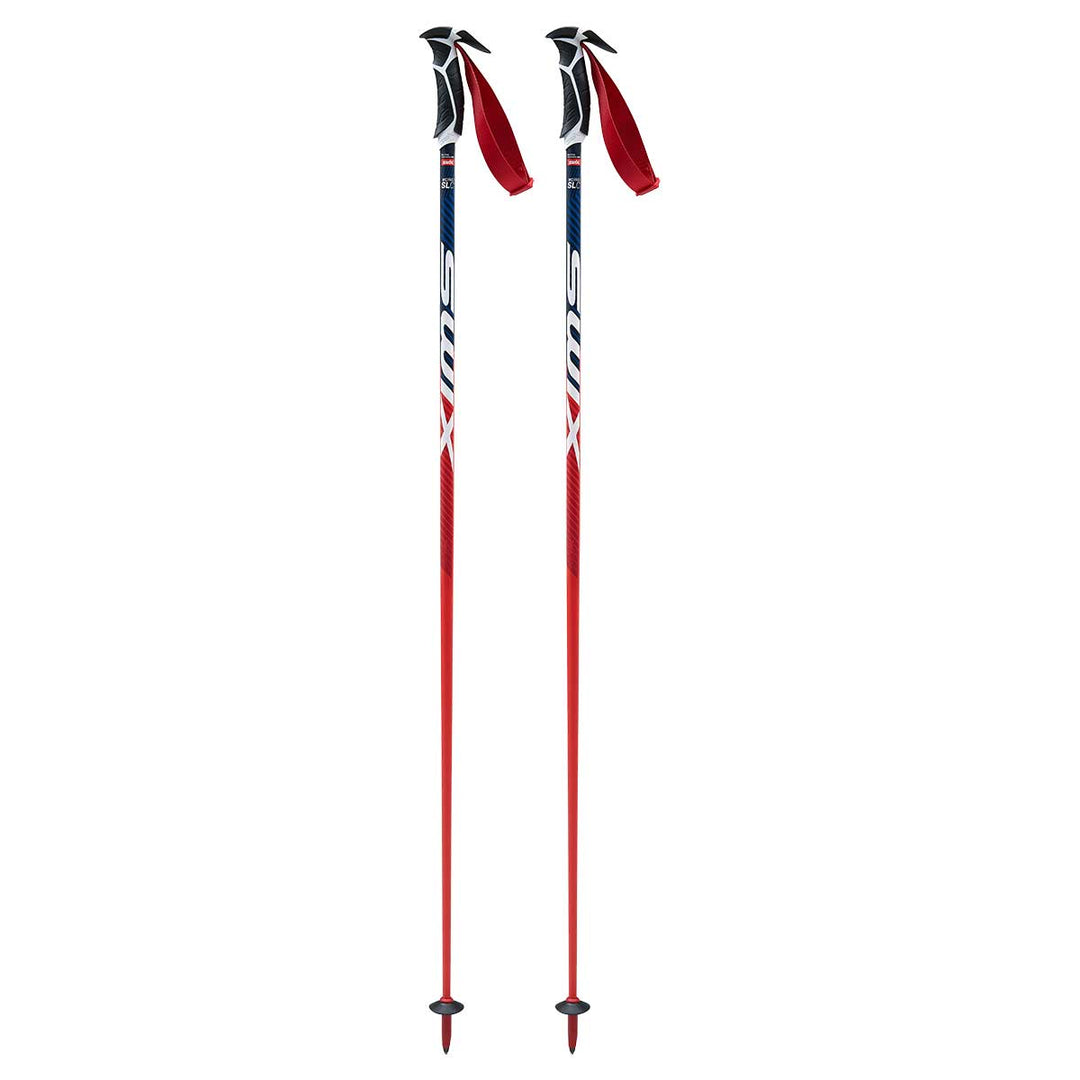
The SL version uses a straight carbon shaft with the DD4 grip, ADD Tab retention system and Alpine Racing Basket, plus compatibility with Swix adult slalom pole guards. The GS pole, sold by Swix as the World Cup Pro Super G, combines the traditional bent GS profile with an elliptical IPM carbon shaft, downhill racing handle and Alpine Racing Basket. The DH version uses a dedicated downhill bend, aerodynamic IPM shaft and downhill racing components, with increased stiffness for a powerful push out of the start.

Key Features

  • Discipline-Specific Versions: Choose a straight SL pole, traditional bent GS pole or dedicated DH pole for the appropriate alpine race discipline.
  • Carbon Race Construction: Carbon shafts balance low weight, stiffness, swing and strength for competition-level performance.
  • DD4 Grip with ADD Tab (SL): Swix's retention system helps keep the pole connected to the racer's hand when the grip opens during gate contact.
  • Elliptical IPM Shaft (GS, DH): Shaped carbon construction creates an aerodynamic profile designed to reduce drag at speed.
  • Race-Specific Bends (GS, DH): Dedicated GS and DH shaft profiles position the poles closer to the body in a race tuck.
  • Increased Shaft Stiffness (DH): Swix rates the carbon DH shaft three times stiffer than its aluminum downhill poles for reduced flex during the start push.
  • Slalom Pole Guard Compatible (SL): Fits Swix Slalom Pole Guards in the Adult DD4 version. Guards are sold separately.

Specs

  • Use: Alpine Ski Racing – SL, GS & DH
  • Shaft: Carbon
  • Shaft Diameter: 13.3 mm at Handle; 10 mm at Ferrule
  • Strap: Adjustable Alpine Strap

SL Specs

  • Swix Model: World Cup Pro Slalom (AC105-00)
  • Shaft: Straight Carbon
  • Basket: Alpine Racing Basket
  • Grip: DD4 with ADD Tab
  • Pole Guard Compatible: Yes – Adult DD4 Swix Slalom Pole Guard (Sold Separately)

GS Specs

  • Swix Model: World Cup Pro Super G (AC115-00)
  • Shaft: Traditional GS Bend (Swix Super G Bend), Elliptical IPM Carbon
  • Basket: Downhill Racing Basket
  • Grip: Downhill Racing Handle

DH Specs

  • Swix Model: World Cup Pro Downhill (AC125-00)
  • Shaft: DH Bend, Elliptical IPM Carbon
  • Basket: Downhill Racing Basket
  • Grip: Downhill Racing Handle

Construction & Technology

Carbon Race Construction

Swix engineers the WC Pro carbon shafts around the weight, stiffness, swing and strength requirements of alpine racing. The SL version uses a straight shaft for quick handling through the course, while the GS and DH versions use shaped carbon shafts designed around aerodynamic race positions at higher speeds.

IPM Construction (GS, DH)

Internal Pressure Molding (IPM) allows Swix to form the carbon GS and DH shafts with their discipline-specific bends and elliptical profiles. The process creates the shaped shaft as part of the carbon construction rather than starting with a conventional round tube.

Elliptical Cross-Section (GS, DH)

The GS and DH poles use a flattened elliptical shaft profile rather than a conventional round cross-section. The aerodynamic shape is designed to reduce drag when the poles are held alongside the body at speed.

Start-Gate Stiffness (DH)

Swix rates the WC Pro Downhill carbon shaft three times stiffer than its aluminum downhill poles. The increased stiffness reduces shaft flex during an aggressive start push, helping transfer force through the poles as the racer accelerates out of the gate.

DD4 Grip & ADD Tab (SL)

The SL pole uses Swix's DD4 race grip with the ADD Tab retention system. Left- and right-specific tabs help secure the pole to the hand even when the racer's grip opens during gate contact.

Pole Guard Compatibility (SL)

The SL version is designed for the Adult DD4 Swix Slalom Pole Guard, which mounts directly to the compatible grip and provides full hand and thumb coverage for cross-blocking. Guards are sold separately. See all slalom pole guards or add ski pole guard installation.

Carbon Shaft Care

Sharp ski edges can damage carbon fibers. Swix recommends keeping carbon poles separated from ski edges during transport, either by carrying them separately or using a dedicated pole bag.


Recently viewed